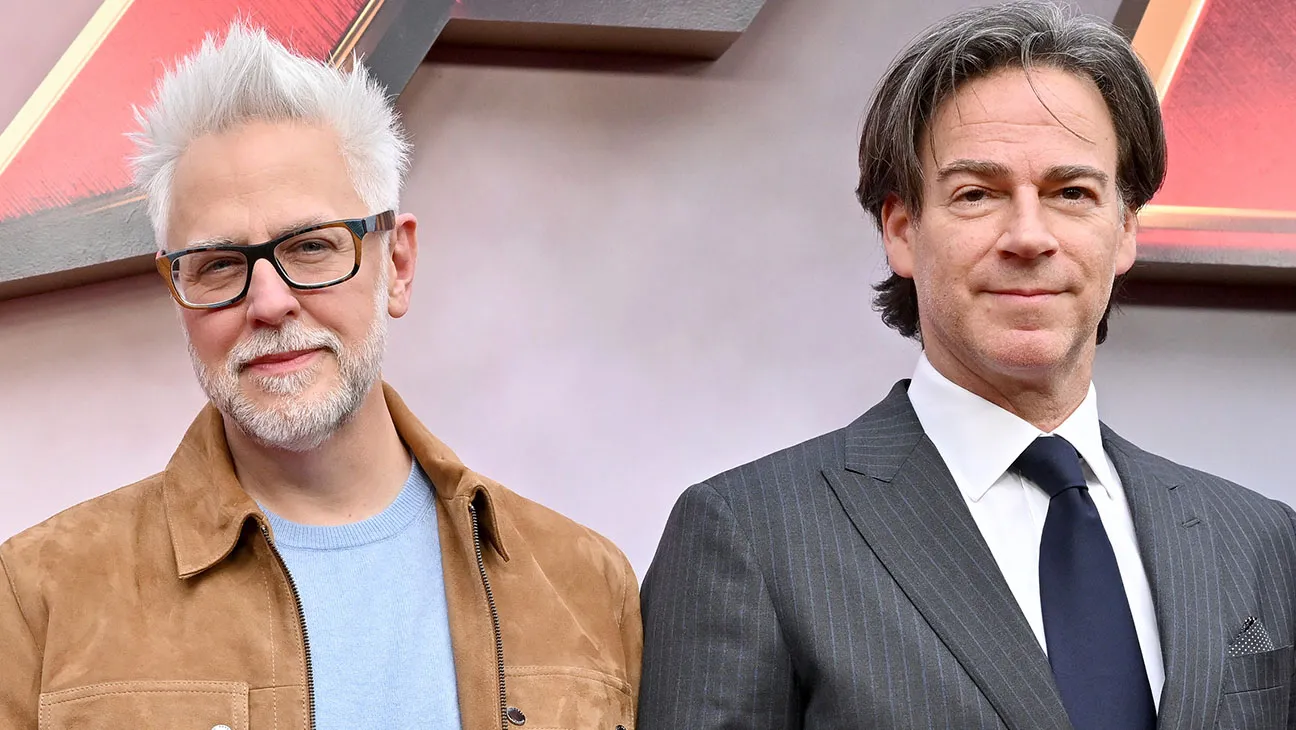
DC Studios is preparing for another major transition, and this time, the change is happening at the very top.
In a surprising announcement today, James Gunn and Peter Safran are stepping away from their leadership positions as co-heads of DC Studios. Replacing them is former Marvel Studios executive Jeremy Latcham, who will assume the position of president and chief creative officer beginning December 1, 2026.
The announcement represents a significant turning point for DC, a studio that has spent the past several years attempting to establish a unified cinematic universe capable of competing with Marvel’s blockbuster dominance.
It was just announced today that James Gunn and Peter Safran will be stepping away from their roles as co-presidents and will be replaced by Marvel veteran Jeremy Latcham. To some, this development may seem inevitable, not only because of the recent Paramount takeover of Warner Bros. Pictures, but also because of the disappointing box-office performance of Supergirl and the comparatively modest commercial reception of Clayface, neither of which may have generated the financial returns executives initially anticipated.
When Gunn and Safran took control of DC Studios in 2022, they inherited a franchise struggling with inconsistent storytelling, competing creative directions, and uncertainty surrounding its most recognizable characters.
Their mission was ambitious: rebuild the DC brand, establish a connected cinematic universe, and restore audience confidence in characters such as Superman, Batman, Wonder Woman, and the larger DC pantheon.
The new direction began with the Gods and Monsters chapter, an ambitious slate of films and television projects designed to give DC a more cohesive identity.
There were successes along the way. Gunn’s Superman brought in approximately $618 million worldwide, providing the new DC Universe with a promising theatrical foundation.However, the financial picture became more complicated with subsequent releases.
Supergirl, which reportedly cost approximately $170 million to produce, generated around $126 million worldwide. That performance represents a considerable commercial disappointment for a major superhero production.
Meanwhile, Clayface, a darker and more unconventional entry into the DC lineup, generated approximately $109 million worldwide against a reported production budget of $44 million. Although its theatrical performance was considerably smaller than that of a traditional superhero blockbuster, its lower production cost makes its financial prospects a different conversation.
Nevertheless, the question remains whether DC’s current direction has been delivering the commercial momentum that Warner Bros. and its new ownership envisioned.
Perhaps the most interesting aspect of this announcement is the appointment of Jeremy Latcham. Unlike Gunn, whose background is primarily rooted in filmmaking, Latcham brings extensive executive and production experience from Marvel Studios during the company’s most influential years.
Latcham joined Marvel Studios in 2004 and eventually became senior vice president of production and development. During his time there, he worked closely with Marvel president Kevin Feige and contributed to the development of several projects that helped establish the Marvel Cinematic Universe as a global entertainment powerhouse. His production credits include Iron Man, Iron Man 2, The Avengers, Guardians of the Galaxy, Avengers: Age of Ultron, and Spider-Man: Homecoming.
These are not insignificant credits. Latcham was involved during a period when Marvel was transforming relatively independent superhero properties into an interconnected theatrical franchise.
His experience with The Avengers is particularly noteworthy. The film represented the culmination of Marvel’s initial cinematic experiment, bringing together several independently established characters into one massive theatrical event. He also worked on Guardians of the Galaxy, a project that carried considerable creative risk at the time. The film introduced audiences to relatively obscure Marvel characters and ultimately became one of the studio’s most recognizable franchises.
Interestingly, Latcham and Gunn already share a professional history through their work on Guardians of the Galaxy. That relationship could prove valuable as Latcham begins navigating the creative and corporate landscape at DC.
Following his departure from Marvel in 2017, Latcham established his own production company. His subsequent projects included Bad Times at the El Royale and Dungeons & Dragons: Honor Among Thieves, further demonstrating his experience working across different genres and established entertainment properties.
Latcham’s appointment raises several important questions about the future direction of DC Studios. Will the studio continue following Gunn’s established Gods and Monsters roadmap, or will Latcham introduce a different creative philosophy? Will DC place greater emphasis on established characters such as Batman, Superman, and Wonder Woman? Could the studio begin prioritizing larger theatrical crossover events in an effort to compete more directly with Marvel?
These questions become particularly interesting considering Latcham’s experience working within Marvel’s interconnected storytelling structure.
However, it would be premature to assume that DC will simply attempt to replicate the Marvel formula. DC has a distinct identity, an enormous library of characters, and an audience that has repeatedly demonstrated an appetite for different interpretations of its properties.
Gunn and Safran are not disappearing from DC entirely. They are expected to return to their creative responsibilities, with Gunn continuing his involvement in *Superman: Man of Tomorrow*. Their departure from executive leadership does not necessarily mean the immediate abandonment of projects already in development.
For Latcham, the challenge is considerably different. He is inheriting a franchise that has already undergone several creative reorganizations and must now demonstrate that DC can maintain a consistent direction under new corporate leadership.
The departure of James Gunn and Peter Safran represents the end of an important chapter in DC Studios’ history. Whether their leadership ultimately proves successful will remain a subject of debate among fans. They attempted to establish a new foundation for the franchise, and while Superman demonstrated the potential of their vision, the commercial performance of subsequent releases has raised legitimate questions about the long-term strategy.
Jeremy Latcham’s appointment is an intriguing development, particularly given his history with Marvel Studios and his involvement in some of the MCU’s most important productions. But having helped build one successful superhero universe does not automatically guarantee success with another.
DC has the characters, the mythology, and the cinematic history. What it needs now is consistency, strong creative leadership, and a clear understanding of what audiences want.